top of page
 |  |  |  |
|---|---|---|---|
 |  |  |  |
 |  |  |  |
 |
Overview
Overview
-
In recent years, Microsoft has been developing Azure IoT Operations (AIO)
-
AIO is a unified IoT solution connecting production line hardware to the cloud
-
Users can setup data pipelines to streamline supply chain management
-
This enables traditional manual labor to be automated saving time and resources
-
AIO will be publicly released in November 2024 and has no competitors

12 weeks
Sole Designer

3 projects
Customer Requests
Cloud + AI
Interaction Design
Problem 🚩
OT users have to physically monitor, diagnose, & troubleshoot devices in their production line due to the absence of cloud-IoT-monitoring solutions; causing increased inefficiency, delayed response times, & limited scalability.
The Solution ✨
Enable customers to seamlessly onboard assets and devices to flow data from their physical operations, build adaptive applications that act on data across cloud and edge, and enable collaboration across OT, IT, developers, and data professionals to power insights and decision making.
Who are our users? 👤
Primary

Secondary
How it all Started 🎬
I was tasked to "Enhance the overall experience". Since Azure IoT Operations has no competitors, a competitive analysis was out of the question. So, I decided to start by conducting a design audit of the current UX.
Research


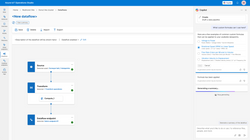
Theme: for new users, navigating the data pipeline section was extremely confusing. This made a strong case for integrating copilot to reduce friction
Building on existing research 🧐
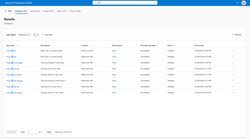
After digging deeper into past research from the team, I came across a recent benchmark study where we timed how long it took customers to complete tasks across each section of our experience:


Customers struggled the most to complete a task within the data pipeline section
Ideating collaboratively 💡
I wanted to flesh out concepts that made the functionality of data pipelines more intuitive for first-time users. So, I held a whiteboard workshop with a few designers. We reached a promising solution that I then mocked up in low-fi.


Ideation
Feedback from PM/Eng 🗣️

I felt a bit discouraged at this point, but I learned an important lesson—to never take feedback personally, but to learn from it and use it as an opportunity to grow
Hitting the drawing board again 💡
I decided to hold an ideation workshop with a Senior Designer on my team. The goal of the workshop was to capture core pain points of customers and translate them into entry points for Copilot to enhance the experience.


Moving forward, I felt more optimistic with the clear insight into which complex tasks to prioritize in guiding the user.
Final Design 🎨
User Study Findings 📊
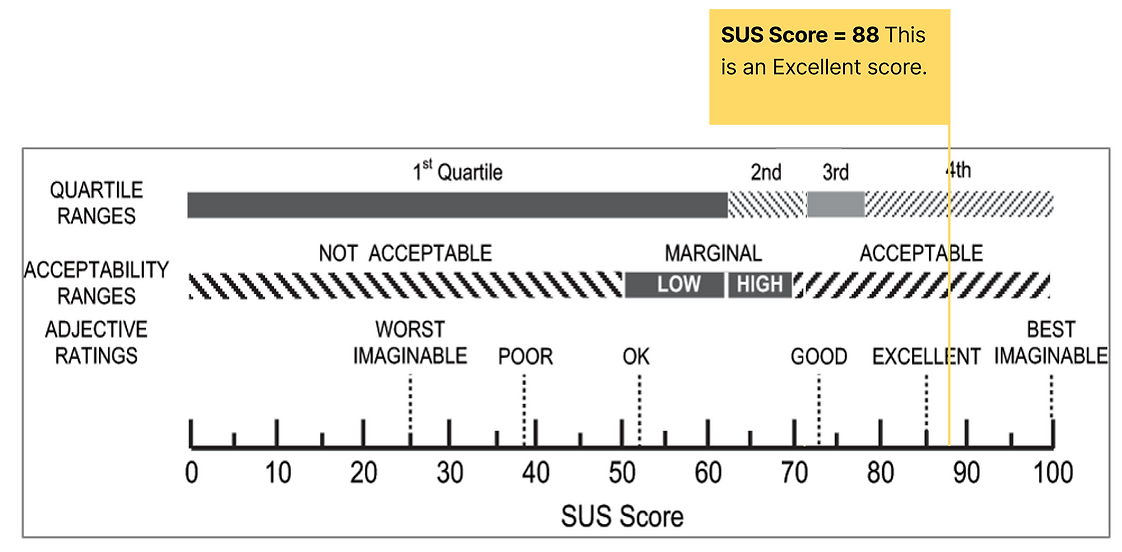
I felt that there was still a clear lack of data to determine if the changes made were successful in enhancing the user experience for our Day 0 customers. I took this opportunity to plan a cognitive walkthrough study with 10 participants who had no prior knowledge of the platform.
.png)
.png)
SUS Score = System Usability Score
Impact
Metrics of success 🎯
+25%
Increase in system usability for new customers
-70%
Decrease in time taken to edit data pipeline
+58%
Increase in customer satisfaction
Before solution: Avg SUS score = 68
After solution: Avg SUS score = 88
Percentage difference:
88 - 68 = 20
(88 + 68) / 2 = 78
(20 / 78) × 100 = 25.64% increase
Before solution: Avg time on task = 6:52
After solution: Avg time on task = 2:03
Percentage difference (converted to seconds):
6 × 60 + 52 = 412 sec
2 × 60 + 3 = 123 sec
412 - 123 = 289 sec
(289 / 412) × 100 ≈ 70.15% decrease
Before solution: Avg CSAT score = 60/100
After solution: Avg CSAT score = 95/100
Percentage difference:
95 - 60 = 35
35 / 60 = 0.5833
0.5833 × 100 = 58.33% increase
Key learnings 📝
1) You are not your work. Emotionally detach yourself from your designs.
2) Don't wait for a green light: just do. Seek out feedback and collaboration early.
3) Speak your mind. Don't ever suppress your voice out of fear of being incorrect
4) Embrace failure. It's a chance to learn/grow. Don't let fear of failing prevent taking action.
5) Understand the business. Know the goals deeply & the customers you're serving.
Refection
Reflection 🪞
Ambiguity is a gift. I deeply enjoyed having the freedom to define a direction and run with it. But I now understand that knowing when & who to involve in the process is key. We can't do everything ourself.
Having to design for deeply technical problems made me learn to love complexity, as it warrants approaching problems with a high level of attention and care that cannot be fabricated.
"Good design" is not visual. An experience can be visually appealing, but if it breaks customer mental models and/or expectations, it falls apart. It is our job to always advocate on behalf of the user...
But we must balance this with the business goals of the org. It requires utmost delicacy in the crafting and framing of our work.
A great mockup will not save the day, if its not presented to the right people, in the right context. It's important we craft compelling narratives that have the ability to sell that story through.
bottom of page